Trump’s so-called “big beautiful bill” is currently making its way through Congress, and the proposed budget includes unprecedented cuts to NASA. More broadly, it reflects a clear de-prioritization of scientific investment, research, and development. Perhaps most concerningly, it proposes cancelling numerous active space science missions that are currently producing valuable results.
This bill would reduce NASA’s science budget by 47%, the largest cut in the agency’s history, bringing its total funding down to an inflation-adjusted level not seen since 1961. For context, NASA’s budget is already relatively modest. Under this proposal, it would be reduced from $24 billion to $18 billion, while the Department of Defense sees a staggering $120 billion increase, pushing its budget to over $1 trillion. I’ve previously written about how little we spend on NASA and the tremendous return on investment it provides here. The chart below from The Planetary Society shows just how historically steep this proposed cut would be:
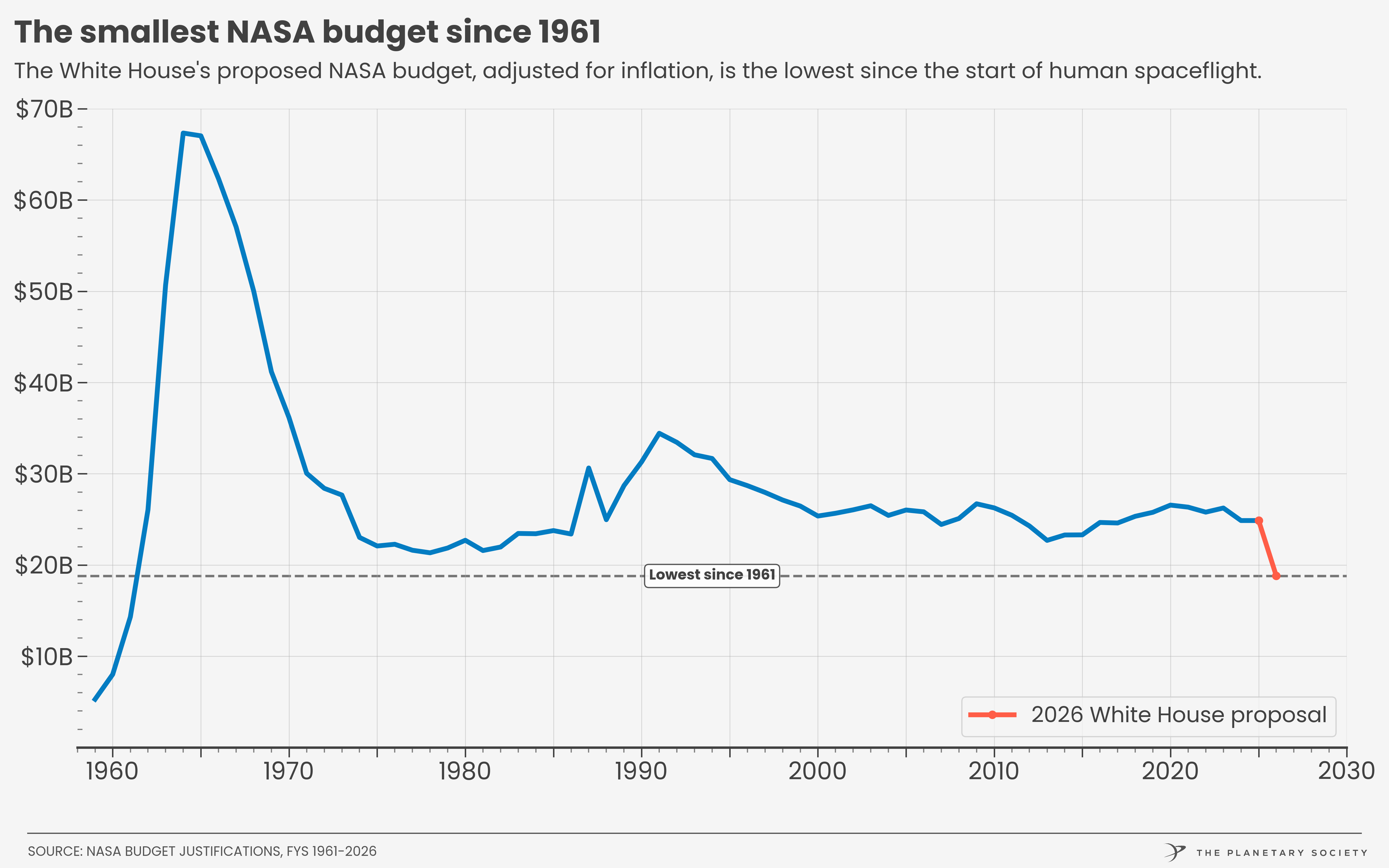
NASA historical inflation-adjusted budget (credit: Planetary Society)
To be clear: I support responsible efforts to reduce national debt and deficits. But this bill does nothing of the sort. Instead, it slashes programs that make the U.S. exceptional, like scientific research and space exploration, while massively expanding spending and bureaucracy in other departments (e.g., DoD, ICE, DHS, and border enforcement). If this is how we choose to prioritize our limited tax dollars, then I fear for the future of our space program—and for the fundamental science that underpins our national innovation and global leadership. The pie chart below illustrates just how disproportionately we allocate funding to defense, security, and deportation infrastructure compared to NASA:
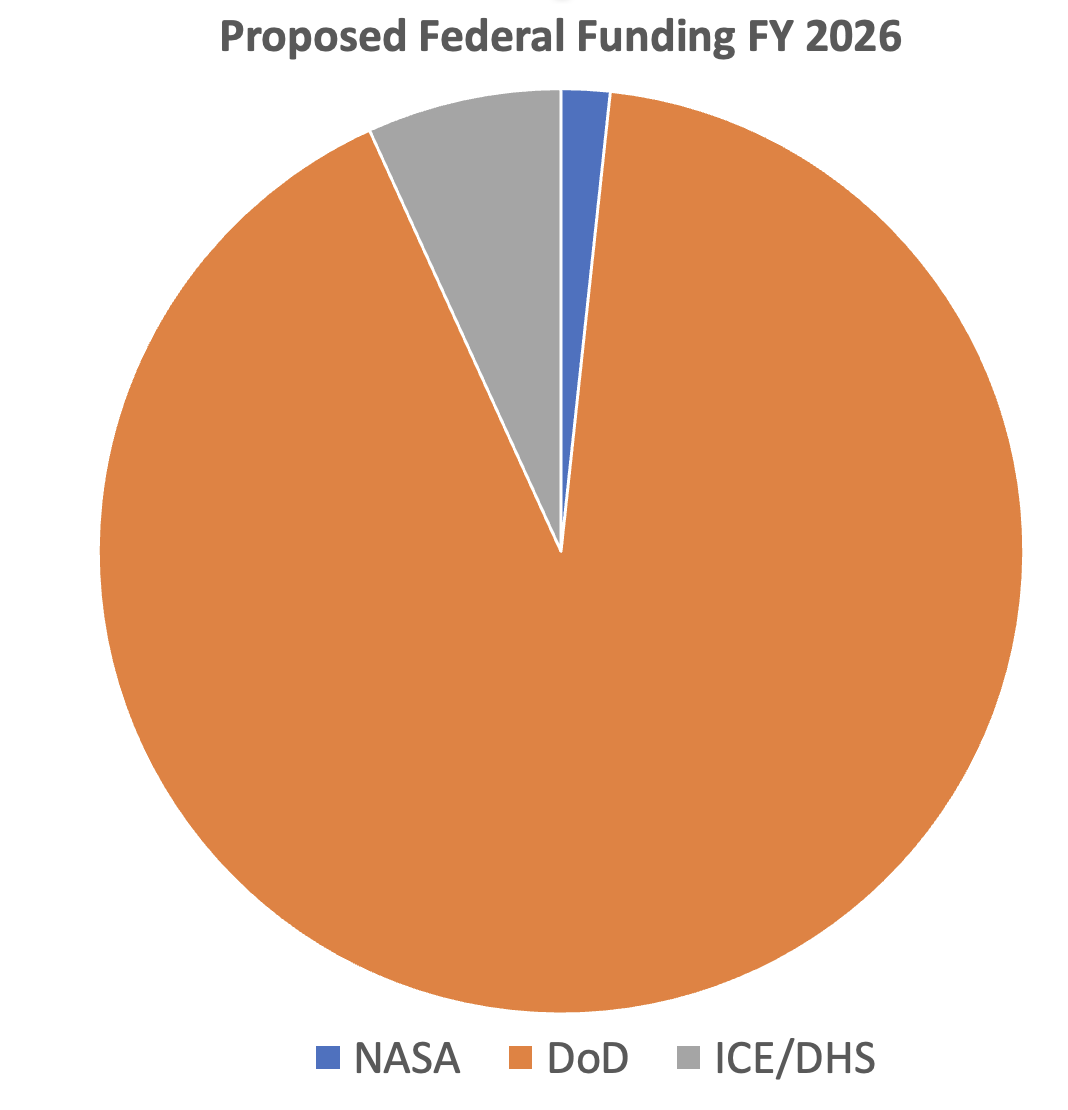
Proposed Funding Levels for Agencies for Fiscal Year 2026
Some might argue that we’re simply shifting toward the privatization of space exploration, citing companies like SpaceX and Blue Origin. But don’t be misled, “new space” companies still receive much of their funding from tax dollars and remain mostly focused on launch vehicles and low-Earth orbit missions. I touched more on this dynamic in this article from 2016. Perhaps most short-sighted of all is the cancellation of active science missions that are currently yielding incredible discoveries. The vast majority of the investment in these projects has already been made; now, just as they’re beginning to deliver returns, we’re abandoning them. For an overview of the missions set to be effectively discarded in space, read the article below from the Planetary Society.
Personally, this hits close to home. MAVEN, the first mission I worked on, may be among those affected. These cuts threaten to cede leadership in solar system exploration to countries like China, as many of our brightest minds are forced to leave the field or shift to other industries. I hope to weather this storm and continue doing the work I love, but I’d be lying if I said my optimism isn’t fading. It’s a reality I never imagined I’d face. I write not only because this impacts my livelihood, but because these cuts represent an existential threat to U.S. leadership in planetary science and space exploration. There is still time to reverse course during the reconciliation process. I urge anyone who values scientific excellence and national achievement to contact your representatives and advocate for our space program. I’ve written my representatives already. I hope you’ll do the same, to save NASA, to preserve our leadership in space, and to continue advancing the knowledge of our species.
Planetary Society article about cancelled missions
Planetary Society article – scientists unite against NASA cuts